BAC+ — A Good Choice for Gen Z
BAC+ (Beyond) is a skincare brand I created from scratch — rooted directly in my own experience. After years of visiting dermatology clinics as a teenager with acne-prone skin, I kept noticing the same gap: most skincare brands either overwhelm customers with too many active ingredients or make vague “natural” claims that mean nothing. Neither actually helps a Gen Z customer understand their skin or trust what they’re putting on it.
BAC+ is my answer to that problem. Built around probiotics as a hero ingredient — stands for barrier-first skincare that goes beyond just treating the surface. The name says it directly: BAC, bacteria. The plus sign, more than what you can see.
Challenge
- Low awareness of probiotics in skincare: Most Gen Z consumers know probiotics from gut health — not skincare. Before BAC+ could sell anything, it needed to teach.
- Greenwashing risk: “Clean” and “sustainable” are words Gen Z has learned to distrust. Any sustainability claim BAC+ made would need to be backed by visible, verifiable proof — not marketing language.
- Price sensitivity: Gen Z wants quality but has limited budgets. The brand’s value had to be felt before the price was seen.
- Regulatory and trust barriers: Science-backed claims require proof. Dermatologist endorsement and lab data weren’t optional — they were the foundation that the entire strategy rested on.
My Approach
Before making any recommendations, I worked through a structured research process to understand both the brand and the market it was entering:
- I started with the customer’s emotional state, not the product. Gen Z consumers told me — through social listening and my own experience — that they feel overwhelmed and unqualified to make decisions. Too many products, too many activities, too little explanation. This is the feeling of being overwhelmed.
- I mapped what builds trust for Gen Z specifically: peer recommendations, third-party proof (not brand claims), visible ingredient transparency, and brands that educate rather than sell. This told me that BAC+’s first job was to teach probiotics — not promote them. Education had to come before persuasion.
- I researched how Gen Z evaluates sustainability claims and found that vague language (“eco-friendly,” “green”) actively backfires. They want specific proof to present our sustainability strategy.
- Gen Z’s attention lives on TikTok and Instagram, but their trust lives in peer experience and physical moments. I identified that brand-awareness campaigns alone wouldn’t work — BAC+ needed to create experiences people would talk about and share with themselves.
The Strategy
The positioning I recommended was “Care Beyond The Surface”. This means that BAC+ would launch not as a skincare brand selling products, but as a skincare brand starting a conversation — about skin health, about ingredients, and about what caring beyond the surface actually looks like.
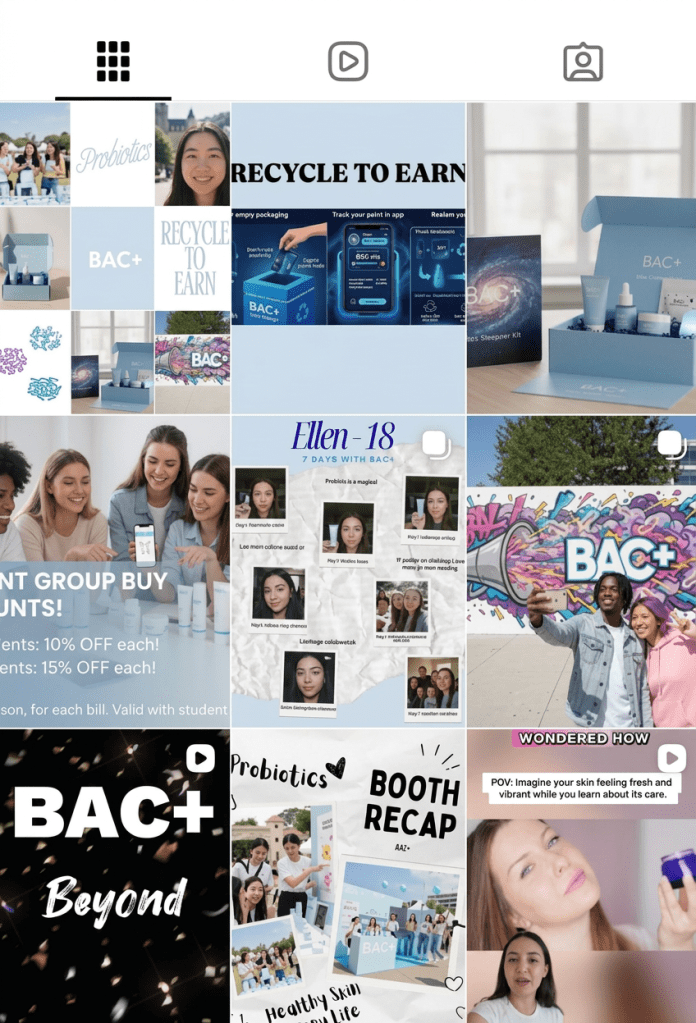
- Brand launch: Educate on “probiotics” at On-ground booths on uni campuses and in youth markets. Free mini skin checks, probiotic starter kits, and a lucky draw for disposable camera kits to document 7-day skin journeys. Goal: create initial recognition with the target customer face-to-face.
- Trust through certification: Reycle-to-Earn program (Return empty packaging for loyalty points redeemable as discounts), show packaging materials, recycling steps, % plastic reduced (if necessary).
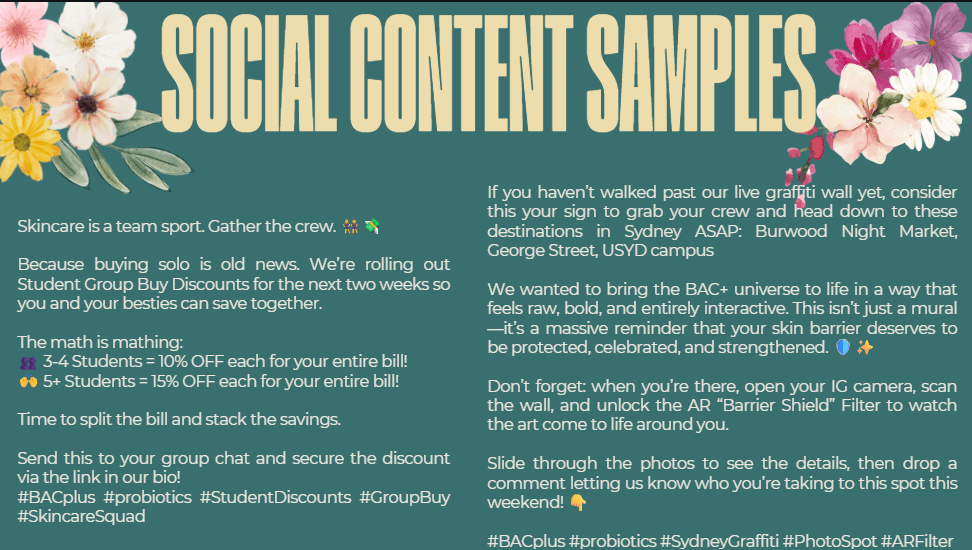
- Brand awareness: Create trends among Gen Z through UGC on social media sites (disposable camera diaries, Graffiti Walls, AR filter).
- Community building: Student group buys discounts (10–15% for groups of 3–5+). Glow in the Dark Sleepover Kits sent to micro-influencers —to lower the price barrier and deepen emotional connection.
Key Insight
Gen Z doesn’t distrust skincare — they distrust brands that talk at them. BAC+’s entire competitive advantage is honesty: one proven hero ingredient, transparent sustainability mechanics, and activations that invite participation rather than just attention.
What I learned
- Honest branding builds stronger trust than pretending to have all the answers.
- The Recycle-to-Earn program and dermatologist endorsement acted as accountability systems, not just marketing tactics.
- Emotional storytelling and scientific credibility can successfully coexist in one brand.
- Gen Z consumers want both emotional connection and proof-based reassurance.
- Future improvements would include expanding the product range, planning realistic customer acquisition costs, and creating a clearer influencer tiering strategy.
Supporting Materials